
Honeywell 150 PSIG Stainless Pressure Sensor – PxL
Honeywell 150 PSIG Stainless Pressure Sensor – PxL
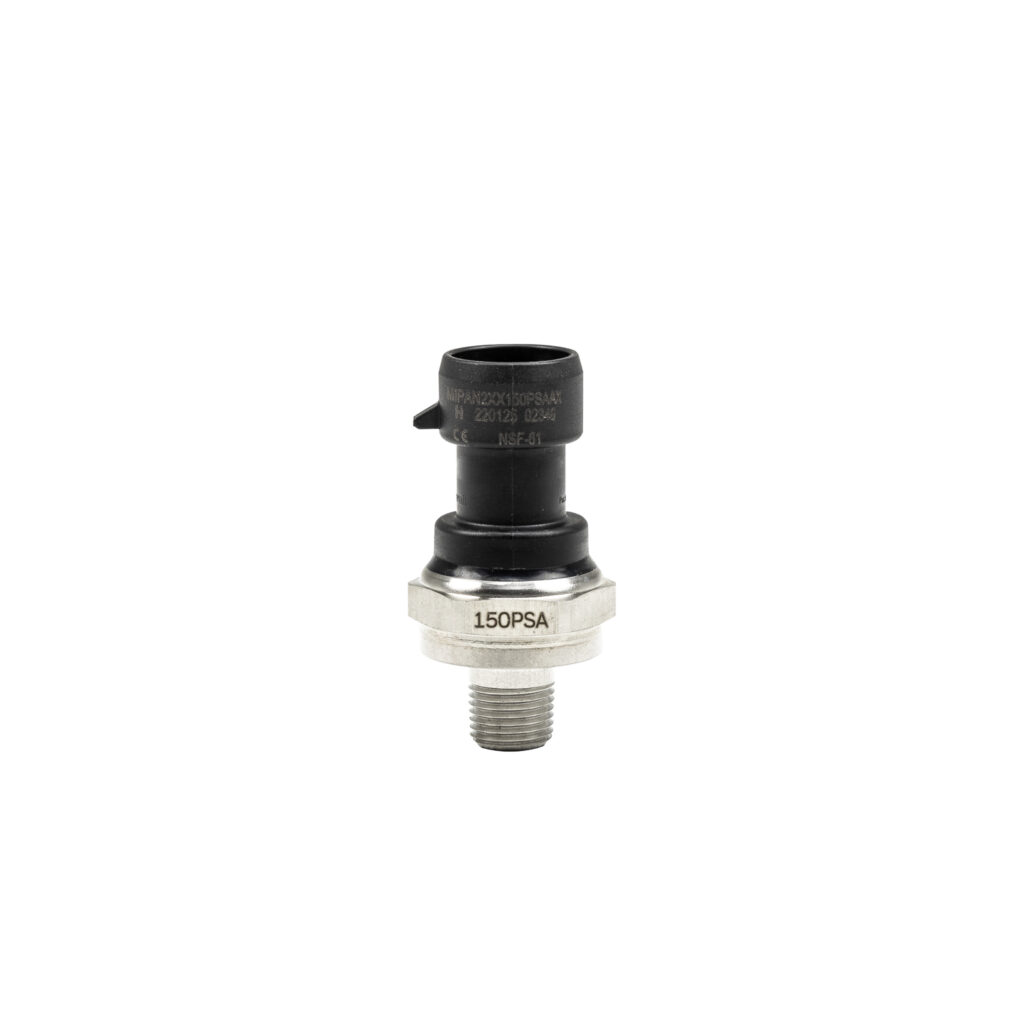
The honeywell 150 psi pressure sensor is a high-accuracy, stainless steel transducer designed for harsh motorsport environments. Compatible with fuel, oil, and coolants, it features a 1/8″ NPT thread and a linear voltage output, making it the perfect upgrade for reliable data logging in high-performance builds.
Details of Honeywell 150 PSIG Stainless Pressure Sensor
Honeywell 150 PSIG Stainless Pressure Sensor – PxL
The honeywell 150 psi pressure sensor (PxL) represents the latest generation of heavy-duty sensing technology. Designed to replace older brass or bulky stainless units, this compact sensor features a rugged all-stainless steel body and diaphragm, making it fully compatible with aggressive media including gasoline, ethanol, methanol, diesel, oil, and brake fluid.
Ideally suited for motorsport applications, it offers high-precision data with a Total Error Band of ±0.75% to ±1.0%. It utilizes a standard 1/8″ NPT male thread for easy mounting and outputs a linear 0.5V to 4.5V signal, ensuring seamless integration with virtually all aftermarket ECUs and data loggers.
FAQs About Honeywell 150 PSI Pressure Sensor
What fluids is the honeywell 150 psi pressure sensor compatible with?
The honeywell 150 psi pressure sensor features a hermetically sealed stainless steel diaphragm, making it compatible with a wide range of fluids including gasoline, ethanol, methanol, diesel, engine oil, brake fluid, and coolant.
What is the thread size of this pressure sensor?
This sensor utilizes a standard 1/8″ NPT male thread, allowing it to easily screw into most fuel regulators, oil distribution blocks, and sensor bungs used in automotive applications.
Does the honeywell 150 psi pressure sensor require a specific connector?
Yes, the PxL series typically uses a 3-pin connector (often a Metri-Pack 150 or GT150 style, depending on the specific sub-model kit). It is important to use the matching connector kit for a watertight seal.
What is the output signal for this sensor?
It provides a standard ratiometric 0.5V to 4.5V linear analog output, where 0.5V represents 0 psi and 4.5V represents 150 psi. This is the industry standard for most aftermarket ECUs.
Can I use this sensor for boost pressure?
While you can technically use it for air pressure, a 150 psi range is usually too wide for typical intake manifold boost readings (losing resolution). It is better suited for high-pressure systems like fuel, oil, or exhaust backpressure.
_Related Products
Comments & Reviews