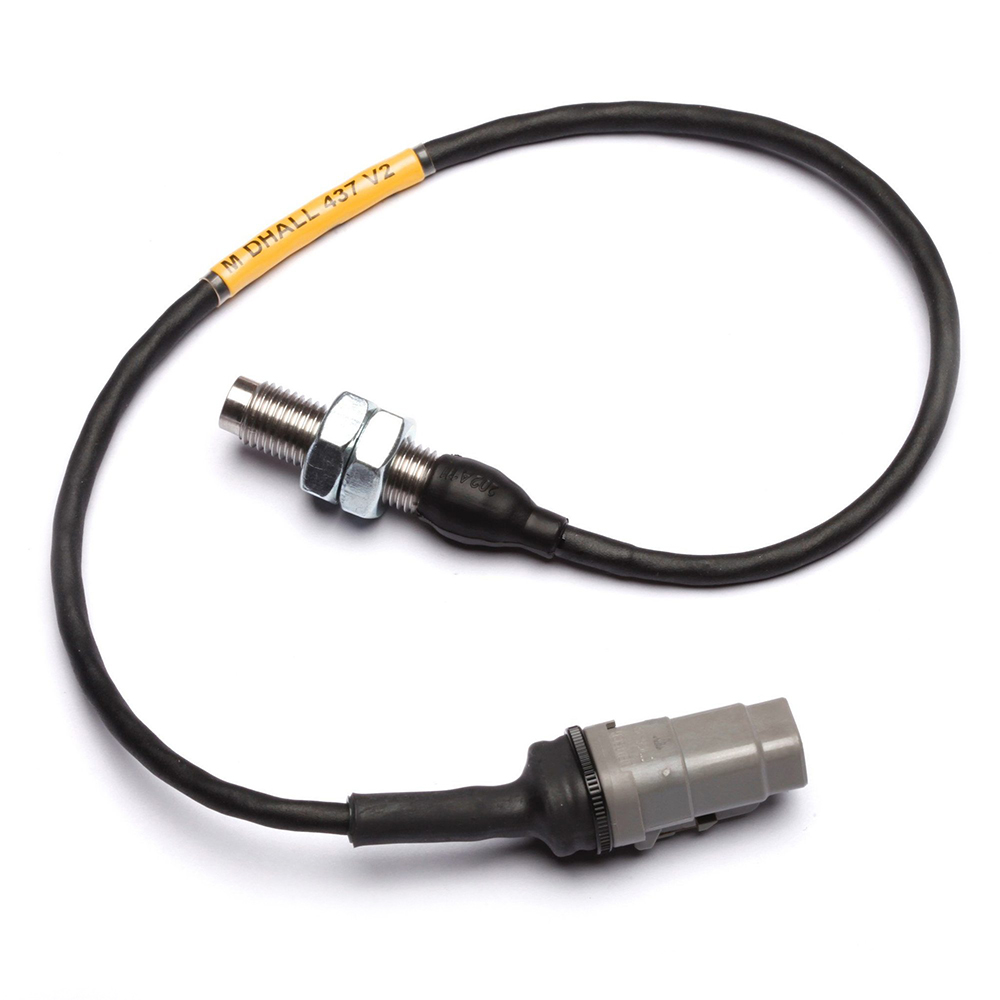
Differential Hall Sensor 437


Differential Hall Sensor 437

$215.00

QTY

Details


Calibrating Wheel Speeds

In order to properly calibrate the wheel speed sensor in the ECU you must know the circumference of the tire. According to Geometry the circumfer­ence is equal to the diameter of the tire multiplied by Pi (3.14159). Unfortunately, your tire diameter will change when it is supporting the weight of the car. So the best way to get the tire circumference is to mark the tire and the ground, and then push the car until the mark on the tire is again back on the ground. Then measure the linear distance between the two marks. You can then divide this measurement into the distance you are calibrating for (1 mile = 5280 ft.). The result is the number of tire revs per mile or KM. Then we have to multiply this number by the number of teeth on the trigger wheel. Finally, the total is divided by 10 to arrive at the calibration value. Circumference = 8.3 feet 5280/8.3 = 636 Number of teeth = 4 so 636(4) = 2544/10 = 254.4 Calibration value is 254.4.

Frequently Asked Questions About the Differential Hall Sensor 437

What is the main advantage of a Differential Hall Sensor?

Unlike a standard Hall sensor, a Differential Hall sensor uses two sensing elements to detect changes in the magnetic field. This design offers superior immunity to electrical noise and vibration, making it ideal for the harsh environments of motorsport.

What applications is the Sensor 437 used for?

This sensor is commonly used for measuring rotational speed and position. Typical applications include Wheel Speed sensing for traction control, Crankshaft/Camshaft position for engine timing, and Turbocharger speed.

What type of target does this sensor detect?

The Differential Hall Sensor 437 is designed to detect ferrous metal targets, such as steel gear teeth, tone rings, or bolt heads. It does not require a magnet to be mounted on the target wheel.

How critical is the air gap installation?

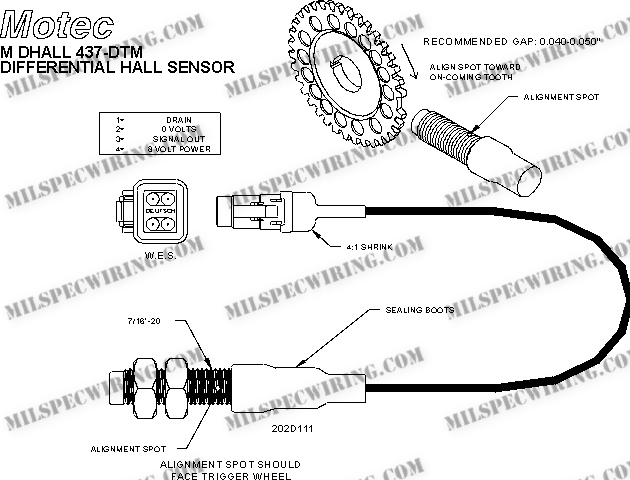
Very critical. Because it detects the passing of gear teeth, the sensor must be mounted with a precise air gap (usually between 0.5mm and 1.5mm) to ensure a clean, consistent signal without physically hitting the target.

What kind of signal does it output?

It typically provides a digital square wave output. This clean on/off signal is easily read by ECUs and Data Loggers (like MoTeC M1 or C127) to calculate precise RPM or speed.

Comments & Reviews

Reviews

There are no reviews yet.

Be the first to review “Differential Hall Sensor 437”

Contact Us

Have Questions or Need Professional Insight?